
LET YOURPLANTSSPEAK
Nature has always been communicating.Vriksh Vani is building the interface to listen.
“Transpiration rate is optimal and stomata are actively open. Environmental VPD is within balanced parameters.”
THE PROBLEM — Invisible Plant Signals
Plants Respond Continuously · Humans Observe After the Fact
Plants respond continuously. Humans just need the right interface.
Plants continuously exchange signals with their environment and exhibit measurable physiological responses. Vriksh Vani is exploring whether some of those signals can be measured, interpreted, and communicated.
“Soil feels moist to touch”
Root Hypoxia & Anoxia
Overwatering can reduce oxygen availability around roots, impairing root respiration and function days before visible yellowing occurs.
“Leaves look green and vibrant”
Transpiration Shutdown
High vapor pressure deficit forces stomatal closure to preserve moisture, slowing photosynthesis despite green appearance.
“Plant droops suddenly”
Thermal Stress Response
Visual wilting is an emergency state. Thermal surface shifts occur earlier as transpiration cooling diminishes.
THE IDEA — What Is Nature Intelligence?
Signals · Interpretation · Understanding · Connection · Care
Signals
What is happening?
Interpretation
What could it mean?
Understanding
Why is it happening?
Connection
What does this tell us?
Care
What should we do?
From raw thermal biometrics to natural human speech.
An interactive demonstration of how NIH-01 is designed to translate invisible leaf micro-climates into clear plant voice interpretations.
“"My leaves are slightly cooler than the room air and ambient humidity is steady. Transpiration is operating peacefully, though I may enjoy a gentle sip of room-temperature water later this afternoon."”
How Vriksh Vani Works in 60 Seconds
No complex charts needed unless you want them. NIH-01 transforms invisible plant biophysics into natural human speech.
Thermal Sensing
FLIR Lepton 3.5 thermal camera reads true leaf surface temperature non-invasively — not just ambient room air.
Real-Time VPD Calculation
NIH-01 computes Vapour Pressure Deficit every 60 seconds to detect transpiration stress before leaves roll or wilt.
NTE™ Spoken Voice Concept
On-device TinyML translates biometrics into natural, calm spoken language helping interpret what your plant may be experiencing.
THE SYSTEM — How Vriksh Vani Works
Thermal Sensing · Environmental Intelligence · Edge AI
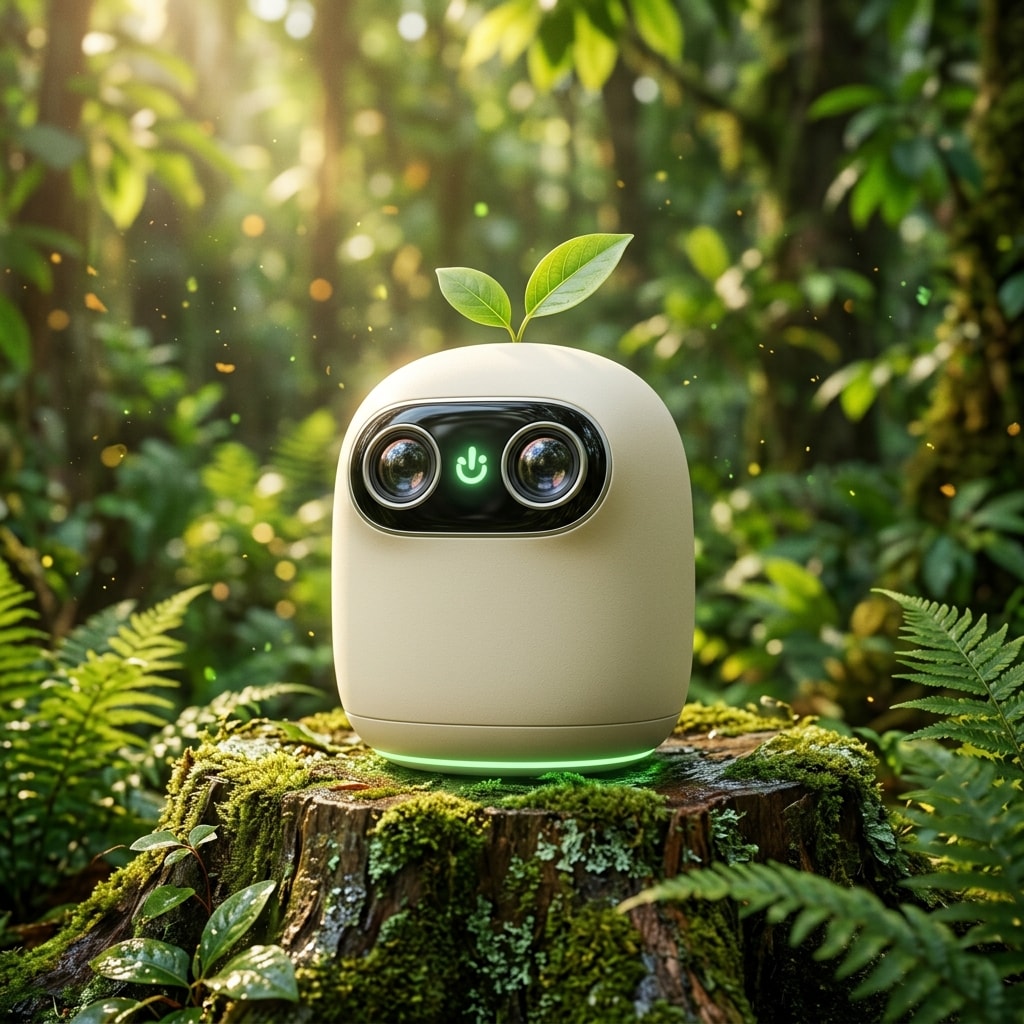
Handcrafted stoneware. Nature-first intelligence.
NIH-01 is being designed around tactile ceramic stoneware bodies, custom optical thermal windows, and biophilic companion aesthetics that integrate naturally into living spaces and botanical collections.
Engineered for absolute clarity, crafted for beauty.
Every planned component inside the NIH-01 hub concept is chosen to respect plant biology and human privacy.
FLIR Thermal Biometrics
Targeting FLIR Lepton 3.5 thermal array to read true leaf surface temperature non-invasively without physical contact.
Bosch BME688 MOX Sensing
Designing with BME688 sensor to measure VOCs and environmental gas signals.
NTE Spoken Voice Engine
Translating biophysical readings into calm voice interpretations across multiple languages on-device.
TinyML Edge Compute
Local-first neural inference designed for low latency with optional encrypted telemetry synchronization.
100% Volatile SRAM Privacy
Thermal frame buffers exist strictly in volatile RAM. No visual images or audio are ever recorded or stored.
Matter & Smart Home Vision
Designed to integrate with Home Assistant, Apple Home, Google Home, and Alexa via Thread and Wi-Fi mesh protocols.
Species Research Library
Building species-specific biophysical profiles for tropicals, succulents, and indoor house plants step by step.
Kiln-Fired Artisan Ceramic
Designed with slip-cast biophilic ceramic fired at high temperatures to blend into living spaces.
Engineering Vision inside Handcrafted Ceramic.
The NIH-01 concept pairs artisanal ceramic design with targeted thermal and environmental biometrics.
FLIR Lepton 3.5 Sensor
160x120 thermal resolution to measure leaf surface temperature dynamics non-invasively.
Bosch BME688 Gas Sensor
Scans Volatile Organic Compounds (VOCs) and VSCs emitted during environmental or moisture stress.
ESP32-S3 TinyML Compute
On-device neural inference designed to process biophysical stress states locally without cloud latency.
Zero-Video SRAM Shield
Volatile RAM buffer overwrites thermal data in real-time. Zero video exfiltration by architecture design.
Your garden's intelligence dashboard in your pocket.
The Vriksh Vani App vision for iOS and Android is designed to pair via Bluetooth 5.0 LE. View transpiration estimates, customize voice personalities, and receive early care insights before visible plant stress occurs.
"Good morning! My stomata are open and transpiration is active. 🌿"
THE RESEARCH — Empirical Evidence & Truth
What We Know · What We Are Testing
Plants are not silent. We just forgot how to listen.
For 3.8 billion years, flora developed intricate thermal and biochemical signalling networks. Vriksh Vani bridges biology and technology to make plant signals interpretable to humans.
Thermal Transpiration
Investigating how FLIR thermal sensors can measure sub-degree surface temperature shifts on leaf surfaces to detect stomatal stress.
Empathetic Speech Engine
NTE™ is designed to map biophysical states into natural human expressions, translating complex sensor telemetry into understandable plant perspectives.
Zero-Cloud Edge AI
ESP32-S3 TinyML compute is designed to run inference directly inside the ceramic hub. Thermal frames are processed in volatile RAM and immediately purged.
Our Research & Botanical Hypotheses.
Exploring Stomatal Conductance with FLIR Thermal Sensing
Soil Moisture Probes vs. Thermal Leaf Surface Dynamics
TinyML Neural Model Quantization for On-Device Edge Microcontrollers
THE JOURNEY — Research Cohort & Community
Building Open Nature Intelligence Together
Built on radical honesty, guided by science.
We are at the beginning of the Nature Intelligence journey. Here is the commitment we make to our research community.
Biophysical Stress Sensing
Exploring whether thermal leaf cooling and micro-climates can reveal plant stress hours before physical wilting occurs.
Zero-Video Privacy Architecture
Designing hardware where thermal frames are processed strictly in volatile RAM and immediately overwritten.
Human–Plant Connection
Translating invisible plant physiology into empathetic, natural language to help humans care for living systems.
The Core Questions We Are Exploring.
Our founding cohort is built on transparent exploration, scientific curiosity, and privacy-conscious hardware engineering.
Botanical Curiosity
Can non-invasive thermal imaging detect stomatal closure early enough to prevent domestic plant mortality? That is the question driving our biophysical experiments.
Biophilic Aesthetics
Domestic plant tech should respect living spaces. Designing handcrafted ceramic enclosures that feel like artisanal pottery rather than black plastic gadgets.
Uncompromising Privacy
No optical cameras, no room video harvesting. Processing sensor signals in volatile SRAM on-device ensures domestic privacy is preserved by design.
Transparent Answers on Our Journey.
FLIR thermal arrays measure fine-scale surface temperature variations on leaf surfaces caused by evaporative cooling during leaf transpiration. This enables us to observe potential stress indicators without touching or harming plant tissue.
No. The NIH-01 hub concept contains zero visual cameras. Thermal frames exist strictly in volatile SRAM for edge processing and are immediately purged, ensuring complete home privacy.
NTE™ is our neural translation model concept that interprets biophysical sensor signals (temperature, VPD, humidity, gas levels) and expresses the plant's physiological status through a natural human-friendly voice.
Vriksh Vani is currently in the research, category positioning, and prototype validation stage. We are actively developing models, testing sensor combinations, and building our early research community.
You can join our Founding Research Waitlist. Early cohort members will receive development updates, dataset releases, and priority invitations to test prototype units as they become available.
Join the Nature Intelligence Journey.
Be among the first to receive research updates, prototype access, and contribute to our plant biophysics datasets.